
In The Past and Today
Art is a product of human expression that engages both human creative imagination and skills. As a conscious effort and just like any civilizing process, art proceeds from initial chaos and formlessness, towards order. Apart from expressing and documenting the human condition of a particular period in time, art also depicts the personalities that create them.
Ancient Art
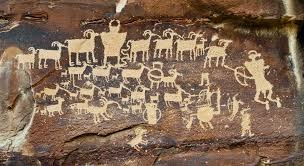
In ancient Egypt, art was produced between the 31st century BC and the 4th century AD, and included painting, sculpture, dressings, architecture among others.
Functional purposes
This early art in Egypt was basically functional. For example, architecture was used to build the famous yet mysterious pyramids of Egypt. More so, apart from serving decorative purposes, the hieroglyphics writings that combined logographic, syllabic and alphabetic elements with more than 1000 distinct characters, were primarily used in communication. Such functional art was rigid because it served the needs of a particular society.
Modern Art
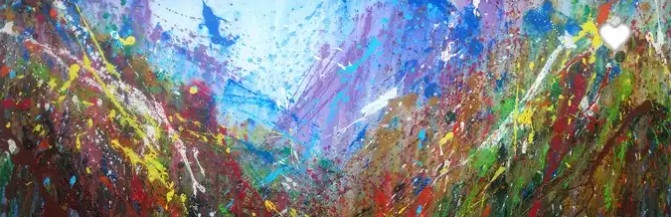
Today, unlike in ancient Egypt, art seeks to depict not objective reality, but rather the subjective emotions and responses that objects and events arouse within a person.
Aesthetics appeal
Through expressionism, artists depict subjective emotions and feelings through distortion and exaggeration. For instance, some modern artists use the expressive possibilities of colour and line to explore dramatic and emotion-laden themes, to convey the qualities of fear, horror, and the grotesque, or simply to celebrate nature with hallucinatory intensity. Such artists have broken away from the literal representation of nature in order to express more subjective outlooks, or states of mind. For instance, in his popular painting The Scream, the Norwegian expressionist artist Edvard Munch depicts an agonised face symbolising the anxiety of the human condition. One of the core elements of such modern day art is that it has a universal appeal.

 TimingNowKE