
“I still question why it had to be my son. I miss him greatly since I never had enough time to bond with him, but the few days we spent together are very special and memorable. Without doubts, I know my son is still alive.” Stella says hopefully, though deep inside, she knows it could be worse.
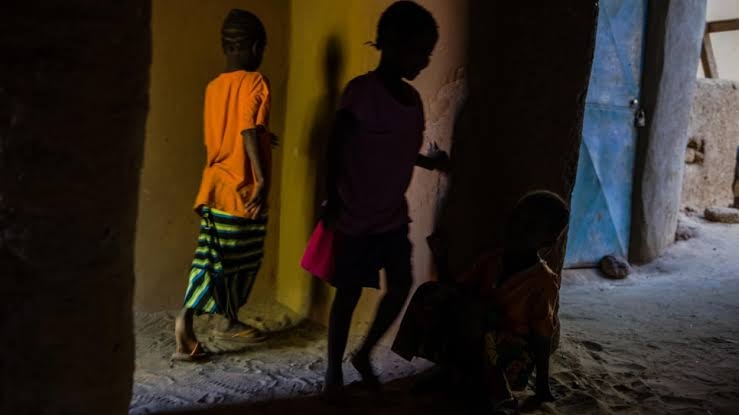
In Slums of Nairobi, Stella Wambui is among the vulnerable women who have been preyed on to sustain an illegal market for babies. Stella lost her Son to traffickers back in the year 2018. According to reports by BBC Africa Eye, Children are being snatched from homeless and needy mothers in Kenya, then sold in the thriving Children black market for profits. Africa Eye says that Kenya, especially Nairobi, has one of the highest cases of child trafficking in the region, perpetrated in both street clinics, and government-run hospitals.
“In order to expose the unscrupulous brokers and dealers in this illegal business, we arranged to purchase an abandoned child from a hospital official, who using legitimate paperwork to take custody of a two-weeks old boy, agreed to sell him directly to us.” Africa Eye noted.
Through a private source, Africa Eye planned to approach one Fred Leparan, a clinical social worker at Mama Lucy Kibaki hospital. Although Leparan job was to protect the wellbeing of vulnerable children born at Mama Lucy hospital, these researchers later discovered that Leparan was directly involved in Child trafficking. This is after in their meeting with him, where one of the researchers was disguised as a woman desperate to purchase a child due to infertility, Leparan agreed to trade a Child.
“I have this baby boy in the hospital,” he mumbled anxiously. “They dropped him off two weeks ago and never came back. I can sell you this one if you like.”
For such victimized mothers who loose their children to inhumane Child traffickers, there is nothing more painful than being separated from their own blood and flesh, especially at a tender age. Such Ill fate befell one Stella Wambui, a vulnerable women and casual worker in Nairobi. According to Stella, she has experienced much agony since her Son Nixon Kimani was stolen in a Nairobi based hospital, under the apparent watch of the premises’ staff. Wambui’s case, just like it is for other unfortunate mothers in Kenya, is that of loosing a child to unsuspected criminals. While giving an account of her sad story, she emotionally recounted her six months attachment with her Son Nixon, before he was snatched away by child stealers.
With little or zero hopes of ever reconciling with baby Nixon ,Stella finds it difficult to believe that her little helpless boy is out there with strangers, or even worse, dead. Her memories of the painful incident are very fresh in her mind, and will probably continue to linger on in the future.
“August 3, 2018 is a day I won’t forget and the most painful in my life. I remember waking up from my bed and going to the infants ward as usual to check on him. On reaching bed 17, I found a kid but he wasn’t my son. I know my son was just months old, but he was very familiar to me. How could I fail to recognize him? He had his father’s creamy hair and a chubby face” She recalls, tears welling up in her eyes.
According to Stella Wambui, just like many other vulnerable women who have been victims of Child trafficking before, at first she never suspected anything; she never saw it coming. It’s only later that she was shocked to realize that it was a deliberate scheme between hospital workers, and faceless Child stealers.
“I gave birth on 4, June 2018 at a county government hospital in Kiambu county. We were discharged two days later and went back to my rented house in Ruaka. After two weeks I realized my son could hardly poop and whenever he did, he was in great pain. Triggered by this, I went back to the pediatrician at the same hospital where he was born. After a brief check up, the pediatrician referred me to a referral hospital in Nairobi since there was an ongoing nurses strike in Kiambu county. This made it very difficult to be admitted to the hospital since no one could attend to us. “On seeing this, I called my husband who promised to be there in two hours time to facilitate the transfer.” She says.
When Stella’s husband arrived at around 2 pm with a hired taxi, they left the hospital and travelled to a Nairobi based hospital. Due to the stubborn traffic snarl-up in Nairobi city, especially in the evening hours, they arrived at almost 7 P.M. Unfortunately the pediatrician had left and they had to wait for another doctor on the night shift to arrive. “I was feeling really desperate but my husband was very patient and comforting.” Stella claims.
According to Stella, at almost 8:30 pm, one of the nurses notified them that the doctor had arrived and guided them to his office. A number of tests were carried out by the doctor after which he gave their Son two injections. At almost midnight, the doctor informed them that the child had no underlying issues , but suggested that the severe constipation needed some medications to ease and fully recover. He however urged them to get admitted at the facility for 2-3 days as the medication was being administered. With limited options, they accepted to get admitted.
“Since Nairobi is a vibrant city with public transport always available, My husband left the hospital and promised to visit the following day. After this, One of the nurses guided me to the wards.” Flashbacks Stella. At some point, Stella says that she began to sense mischief when she realized that there were very strange and complex rules in the facility that really baffled her. “Why were Mothers kept in different rooms from their children”? She wonders. “One would be allowed to visit their Child only to breastfeed, wash and change diapers. I remember questioning the nurse “why separate us, I want to sleep with my child?” She had loudly inquired “We have rules here, and many other places, tembea ujue mambo which closely translates to ,explore and learn more”, one of the nurses had rudely answered. “After minutes of confrontation, I was taken to the room that had many infants in numbered beds, very warm and neat.” She asserts
This conditions and the sight of the many young toddlers, reaffirmed Stella’s trust, and she gladly accepted to keep her little boy at bed 17, after which she was taken to the general ward where mothers were, and allocated a bed too. Since her room was not far from her Son’s, She cleared any doubts in her mind concerning the security status and credibility of this hospital. With her little boy just steps away, she had no reason to worry, or so she had thought.
“There were no restrictions on how many times one was allowed to visit, but only five were allowed at a time. I remember sleeping at almost 1:30 am, but by 5 am I was already up, to go to visit my little boy. When breastfeeding him, I realized that he was in good condition since while I was changing his diapers, I noticed that he had poop which made me feel really well. Satisfied, I went back to my ward. The facility seemed a perfect place and served a good breakfast which is uncommon in Kenyan hospitals. All was good as I continued to visit him regularly, feeding him as the nurses administered the medication. This time, my husband came at around 4 p.m. since we had communicated on phone assuring him that everything was well and hence no need to panic.” Stella recalls.
Stella says that the first day ended normally, and that she was looking forward to completing two more days at the facility, as directed by the doctor. However, on 3 August 2018, the worst happened! On checking her Son, she couldn’t believe it, was she dreaming? he was gone!
“Nisaidie (help me)” She yelled out in panic.
On witnessing this, the other mothers who were near came rushing towards Stella, assuming that her child had developed severe complications. “What’s wrong?” they asked. Instead of replying, Stella started crying out, “I need my child”. On hearing this, the nurses came in angrily and ordered everyone out for causing disturbance, then instructed Stella in a harsh tone to shut up. She didn’t.
“I want my child, this is not mine, give me my child please, please!” She pleaded all through. One of the nurses tried to force her to calm down, which she did for seconds, while attempting to make them understand that someone else had taken her child and placed another one on that bed. To distract her, they kept on insisting that maybe her child was still in the room, but in a different bed. Finally, when Stella was taken through the beds, She carefully searched everywhere. At bed 17, a different face looked up to her innocently. For a moment, She stood aghast. All She could do was stare back at the new face of a Child that was not Nixon. Then abruptly, She vehemently bust out in a painful scream.
As she continued to weep melancholically, nurses began moving around, sneering at her, alleging that Stella was acting out of deep shock and depression, just because her child was sick, which Stella denies. “Later on, I learnt that this was only meant to distract other mothers who had started questioning, wanting to know more. Nevertheless, I urged them to allow me call my husband which they initially refused, but eventually accepted. On calling him, he doubted me too, and thought I was running mad . He however promised to come to the hospital later.” Says Stella. According to Stella, what baffled her most was that the child who had been placed in her Son’s bed, was yet to be claimed two hours later. This added to the mystery. “What is going on?” She had thought. While these thoughts trolled her mind, It eventually hit her hard. The one who had stolen her little boy had deliberately organized the act pretty well. “It was all planned” Stella remembers how confused this incident had left her.
At the hospital, this mental turmoil continued to trouble Stella until her husband who appeared to be more sober arrived and confirmed to the management that indeed, that wasn’t their child, and angrily demanded answers on the matter at once. “Since the management seemed reluctant to cooperate, my husband rushed to the police station.” Stella recounts.
“At around 11 PM the Kenya police officers arrived at the hospital. Meanwhile, I had passed out at the time, and later learned that I had been sedated. The reason for sedating me was apparently to calm me down so as to avoid distracting the operations and serenity of the hospital. Later on ,my husband informed me that the police had recorded a statement from him and asked the hospital to open the CCTV surveillance, which they gladly did, but turned uninterested almost immediately. Despite the urgency of this case, the police postponed the matter, claiming that it couldn’t be handled overnight and that I had to record a new statement the following day to begin an investigation on the matter.” Concluded Stella.
Despite having reported her case to the authority, Stella says that the police claim that they are still pursuing the case, and that the hospital is operating to date. Such reluctance and hesitation in curbing Child trafficking is evidently manifested by the lack of reliable statistics on child trafficking in Kenya; where the government lacks relevant reports and comprehensive national surveys concerning this booming crime. More so, the agencies responsible for finding missing children and tracking the black market in Kenya are under-resourced and under-staffed. That is why Child trafficking cases are so rampant in this Country. According to recent reports, Kenya has recently been named as having some of the highest cases of child trafficking in Africa.
According to reports, child trafficking in Kenya is mostly practiced in Nairobi, Mombasa and Kisumu, and most rampant in slums such as Kibera,Kayole, Zimmerman and other ghettos around the country. These cities and slums have become thriving grounds for traffickers because of their dense population and poverty, which makes vulnerable women prey to Child traffickers. Also, hospitals in these major cities have very high number of inpatients and outpatients that encourage and facilitate traffickers. According to Africa Eye, these baby trade is notoriously booming in slums like Kayole. To establish this, while working with a local journalist, Africa Eyes’ Judith Kanaitha approached a clinic in Nairobi’s Kayole neighborhood, home to thousands of the city’s poorest residents. Kanaitha says that the clinic they approached was operated by a woman known as Mary Auma, who is said to have worked as a nurse in some of Nairobi’s biggest hospitals. While posing as a potential buyer in this shanty clinic, Kanaitha was surprised to be offered a Child on sale. “This one is eight-and-a-half months pregnant and almost ready to deliver,” Auma said, whispering. I only need Ksh 45,000 for the unborn Child.” She sealed the deal mischievously.
Faced by such challenges, the Government of Kenya has been accused of not fully complying with the minimum standards for elimination of human trafficking despite passing the Counter-trafficking in persons act in 2010, which criminalizes human trafficking. Even worse, this act has been poorly implemented and has had little impact on curbing human trafficking at all. This is because the country does not prohibit all forms of trafficking, but criminalizes the trafficking of children and adults for sexual exploitation through it’s Sexual offenses act that was enacted in July 2006. The law enforcers have also been severally accused for not doing much to stop or arrest the perpetrators. This can be attributed to the high corruption problem in the country. Another reason is that, the targeted mothers are mostly poor and from slums. This means that they can’t raise required money to facilitate the investigation process. Because of poverty, these vulnerable women end up going to hospitals susceptible of this vices despite the risk of losing infants.
Is there still hope for mothers in Kenya whose children have been stolen?
To answer this question, Missing Child Kenya, an NGO founded and run by Maryanne Munyendo, is taking responsibility “In its four years in operation, the organization has managed to work on about 600 cases” Munyendo said.
“This is a very big issue in Kenya but it is under-reported. At Missing Child Kenya we have barely scratched the surface.” The issue has not been prioritized in action response plans for social welfare,” she said.
According to Munyendo, this is partly because this is a crime whose victims tend to be vulnerable, voiceless women like Stella Wambui who have neither the resources nor social capital to draw media attention or drive action from the authorities.
“The under-reporting has a strong correlation to the economic status of the victims,” Munyendo says. ” It is true that these vulnerable victims also lack the networks and information to be able go somewhere and say, ‘Hey, can someone follow up on my missing child?” She explains.
Munyendo says that the driving force behind the black market, is the persistent cultural stigma surrounding infertility stereotypes in Africa. “Infertility is not a good thing for a woman in a typical African marriage,” Munyendo said. “You are expected to have a child and it should be a boy. If you can’t, you might get kicked out of your home. So what do you do? You steal a child.” She concludes.
More so, just like Missing Child Kenya, Several other Non Governmental Organizations (NGO’s) have initiated efforts to help victims of child trafficking begin a new journey towards finding their children. However, they also warn that many victims like Stella must find means and ways to live on, since the probability of locating a lost infant in Kenya, is totally minimal. According to Awareness Against Human Trafficking (HAART), Child trafficking cases similar to that of Stella are not given enough attention and priority. That is why only 2% of trafficked children in Kenya make it back home.
https://www.bbc.com/news/world-africa-54892564

 TimingNowKE