

Political behavior in contemporary organizations involves activities that are initiated for the purpose of overcoming opposition or resistance. In most cases, politics in the workplace have proven to be dysfunctional for organization-wide effectiveness.
In some cases, employees indulge in politics to win appreciation from their superiors and tarnish the reputation of the fellow workers. Such Individuals do not believe in working hard and so they turn to nasty politics at the workplace simply to save their own job. According to Prachi Janela (2021);Effects of workplace Politics, “Politics lowers the output of an individual and eventually affects the productivity of the organization.”
Contemporary organizations are highly political entities. Politics in such organizations involves those activities taken to acquire, develop and use power and other resources to obtain one’s preferred outcomes in a situation in which there is uncertainty about choices. Indeed, much of the goal-related effort produced by an organization is directly attributable to political processes. However, the intensity of political behavior varies, depending upon many factors. Whatever the situation, it is important to understand that the root cause of political activities are often scarce resources (including time pressures), social and structural inequalities, and individual personal motivations.
According to (Michael Jarrett, 2017 April); Harvard Business Review, in order for managers to address these challenges, they need to chart the political terrain, which includes four metaphoric domains: the weeds, the rocks, the high ground, and the woods.
This business reviewers say that to navigate such workplace challenges, awareness of two important dimensions is vital. First and foremost, Political dynamics start with the individual player and their political skills, which can evolve into group-level behaviors. At the other end of this dimension is the broader context, where politics operates at the organizational level. The second dimension of the political landscape is the extent to which the source of power is soft (informal) or hard (formal). Soft power is implicit, making use of influence, relationships, and norms. Political activity based on “hard,” formal, or explicit power draws upon role authority, expertise, directives, and reward/control mechanisms. Using these two dimensions of power, managers are provided with the tools to navigate the four metaphoric domains of political behavior in the workplace.
The Weeds

At this level, just like with the weeds, personal influence and informal networks rule. This dynamic grows naturally, without any maintenance. The challenges caused by such political authorities in the workplace can not be ignored.
- Antidote
To deal with this challenge, the working team is called upon to get involved enough to understand the informal networks at play by Identifying the key brokers, as well as the gaps, so that they increase their own influence. For instance, at one Non-governmental organization, the Secretary General was seriously underperforming, and sometimes acting unethically, leading staff to worry that they’d lose the support from key donors and government officials. However, when the problem became unsustainable, the group formed by the staff helped to ease him out to protect the organization’s reputation. Thus, the development of an informal coalition saved the organization.
The Rocks
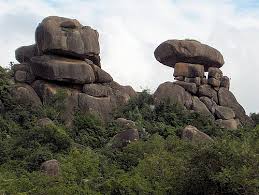
Here, sources of authority emanate from title, role, expertise, or access to resources. It might also include political capital that arises from membership of or strong ties to a high status group such as the finance committee, a special task force, or the senior management team.
- Antidote
Faced by such political behavior, managers are supposed to draw on formal sources of power, rather than fighting against them. They can do this by redirecting the energy of the dysfunctional leader, either through reasoned argument or by appealing to their interests. For instance one Chairman of an advertisement firm would constantly question decisions agreed upon with the management team, changing his mind from one meeting to the next. He even stopped the allocation of resources to fund new structures without notification. Here we see the formal use of hard power to satisfy self-interest over the firm’s longer-term value.
Navigating the terrain here relies on drawing on formal sources of power, rather than fighting For example, in the case of the advertising company herein mentioned, the senior executives had to use the argument of “leaving a legacy” to get the Chairman to see how he was undermining his own and company’s long term interests
In fact, it was this sort of political behavior and misuse of power that inspired the publication of the Opus Economy and Society (Max Weber, 1922). Max Weber was a sociologist and an early organizational scholar, who wrote the classic book about Bureaucracy, where he argued that bureaucracy was the most rational and best way to organize and coordinate modern corporations. This leads us to take the high ground.
The High Ground
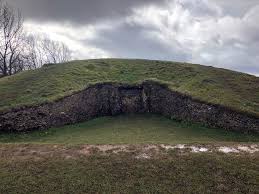
The high ground combines formal authority with organizational systems. The benefits of these rules and procedures is that they provide a check against the whims of individual level, charismatic or autocratic individuals. Thus, the ‘high ground’ provides guide rails for the rocks. It’s a functional political process that uses structures of control systems, incentives, and sanctions that keep the organization in compliance. However, as many executives know, rules and procedures can also lead to the company becoming overly bureaucratic, where rules are used as a political device to challenge interests not aligned with the bureaucrats, or to prevent innovation and change.
- Antidote
Since organizations where the high ground is a problem tend to be risk-averse, managers can also try emphasizing that not changing can be even riskier than trying something new.
So as to reduce bureaucratic authorities/tyranny and increase transparency at all levels of the organization, employees must be aware of the goals and objectives of the organization and strive hard to achieve the same. Even more, the organizational policies should be the same for everyone.
Managers are also called upon to create a working space outside of the mainstream structures, norms, and habitual routines of the organization, so as to provide an alternate source of power. Such actions can also revitalize innovation and change in the workplace.
For instance, a public agency was having problems collecting revenues because the structures were slow and had to follow formalized steps to stop potential fraud. It meant that millions of tax revenues were not collected at the end of the year. Senior leaders decided to set up a dedicated task force outside of the formal organizational structure to solve the problem. After the first year, they had reduced the problem by over 50% and reached a 95% recovery rate by the second year. The organization then changed its official processes to match these improved methods. According to Michael Jarrett, (2021, Harvard Business Review; Four types of organizational politics), Other well-known examples of similar methods include the changes at Nissan, pilot projects at Asda, and companies opening up Innovation Labs in Palo Alto to remove the barriers of bureaucracy.
The Woods

In addition to their formal processes and guidelines, organizations also have implicit norms, hidden assumptions, and unspoken routines — and that’s where we get into “the woods.” The woods can provide cover and safety for people in your organization; or they can be a bewildering place where good ideas and necessary changes get lost. Thus, here it is important to understand the woods from the trees as you can miss the former if you focus on the symptoms rather than the hidden barriers to strategy execution.
Strong implicit norms can define what is even discussable. In some organizations, for example, displays of emotion may be seen as socially undesirable, and so the organization finds ways to marginalize, ignore, or reframe any emotions that are shown. In other organizations, the display of certain emotions are essentially mandatory.
Some organizations get lost in their woods. They focus on the presenting issue rather than the unspoken ecosystem of habits The challenge here is to make the implicit explicit. Ask the stupid question, bringing implicit organizational routines and behaviors to the surface.
- Antidote
To navigate such challenges, managers can get benchmark information from surveys and specialist experts. Once the implicit assumptions are out in the open, leaders can engage the team to reflect upon whether they’re helping their company or hindering it.
For example, in the case of a newly merged international Telecom company, managers could conduct a simple exercise using the culture web framework to help each of the newly merged entities to describe their own cultural norms and those of the other parties. Once truths and myths are generated, they could be discussed and used to iron out blockages by rolling out their distribution and cable network. In turn, this becomes the key to capturing subscribers and business operational success.
More so, since job mismatch leads to politics at the workplace. Responsibilities must be delegated as per the interests, specialization and educational qualification of the employees.
Individuals must enjoy their work for them to stay loyal towards the organization. Because most employees indulge in politics when they have ample free time and nothing innovative to do, managers should ensure that everyone knows what they are supposed to do in the organization
Conclusion
Understanding the political terrain can help executives fight dysfunctional politics. But it’s also important to recognize that each landscape also contains positive dynamics. In either case, try to understand the drivers rather than just judge the behaviors. Project leaders who can avoid the hidden traps of political dynamics, defend themselves against the dark side of politics, and use what they know to support wider organizational goals will find it easier and get more skilled engaging in positive political behaviors at all levels of the organization.
References
- Harvard Business Review
https://hbr.org/2017/04/the-4-types-of-organizational-politics
- Max weber: Bureaucracy
https://www.jstor.org/stable/40292476
- Effects of Politics on Organizations and Employees
https://www.managementstudyguide.com/effect-of-politics.htm

 TimingNowKE