
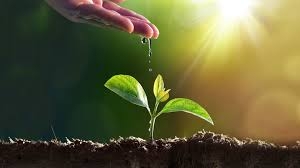
Most crucial developmental agenda’s of Nations are designed to align with the collective United Nations SDGs, that every reasonable country ought to be working towards. However, being confronted by modern day challenges, most nations are finding it difficult to implement their short term goals in line with the bigger global developmental picture.
Barriers to development
As a developing African country, Kenya is facing various challenges in its bid to champion for sustainable economic development. Some of these are briefly outlined herein-
• Climate change and agricultural challenges
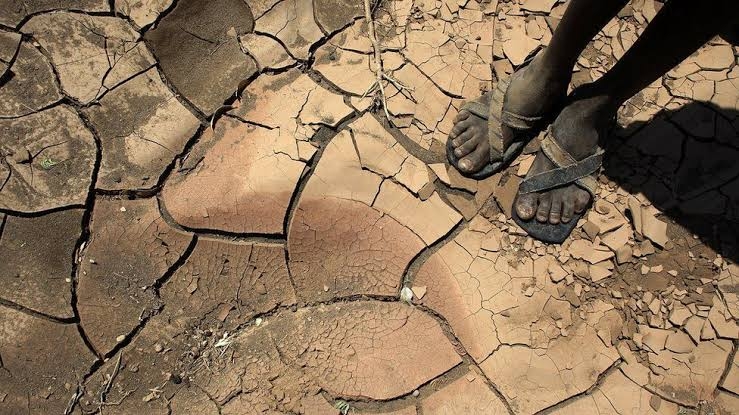
Being a country that is termed as ‘Third World ‘ in the global developmental scales, Kenya faces this notorious drawback that threatens to thwart the country’s agricultural endeavors, and ambitions of using this to achieve sustainable economic development for it’s citizens, and the world.
There is no humanitarian goal more crucial than feeding a world population projected to expand beyond nine billion by 2050. Meeting increases in food demands associated with growing population and income levels is likely to require increases in total food production of about 50 percent or more by mid-century. Furthermore, no other economic sector is more vital to safeguarding human livelihoods like Agriculture-which is more or less determined by the prevailing climatic condition.
• Degradation of the Indian Ocean coast

According to the Nations Environment Programme (UNEP), there is need to restore the health of the estuary while creating new economic opportunities for local residents. Over the past year, UNEP has seen conservationists replant more than 10,000 mangroves, and persuaded dozens of fishers to use legal fishing gears. Through teams that support involvement of the local communities, UNEP has also been working to map and delineate the estuary and improve solid waste management in Malindi.
• Rampant Teenage pregnancies
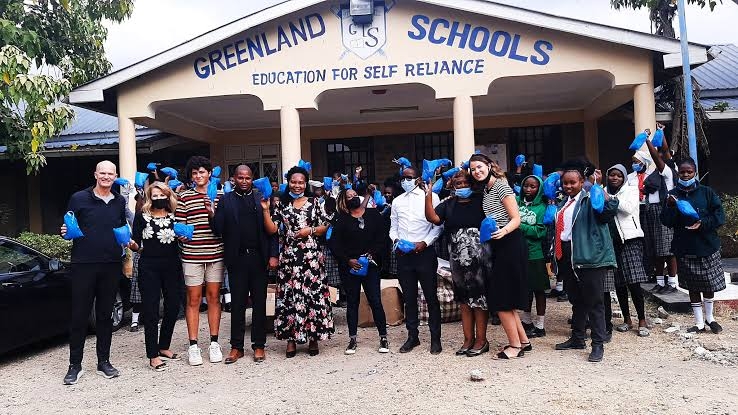
According to recent research, there is overwhelming evidence indicating that teenage pregnancy is the leading cause of school dropout by girls not only in Kenya, but also across the globe. The economic implications of this are dire.
Interventions for development
- Preventing environmental degradation along Indian Ocean coast towards sustainable economic development
During the Worlds ocean day held on 8 June 2021, UNEP launched an initiative-to conserve and sustainably use the oceans, seas and marine resources, by 2030. This step by UNEP looks at a project aimed to restore a critical water route in Kenya.
According to an official in Malindi, the Indian Ocean coast has in the past suffered brutal degradation. Karisa says that in the 1970s, this area was all bush, gesturing uphill towards the paved roads, businesses, and shops that dot Masindi’s streets, he recalls that in recent decades, the town has experienced a surge in population, which has taken a toll on the estuary, a collection of mangroves, sandbanks, dunes, and freshwater pools.
Even more, Karisa reports that residents have chopped down the mangroves that used to cover the estuary’s banks. Miners scoop away the estuary’s sand, potentially impacting water quality, biodiversity and vegetation. Fishers use of mosquito nets, whose small holes trap even small, immature fish, further disrupt the estuary’s ecosystem.
“People used to live far from the estuary and only occasionally came to the water for fishing. There were elephants, monkeys and buffaloes but slowly, the landscape began to change and was emptied of animals.” Asserts Karisa.
With such degradation eating away the economic productivity of Indian Ocean coast, there is urgent need to adopt a project model like the one initiated by UNEP during this year’s World Oceans Day.
According to UNEP, this new project is aiming to restore the health of the estuary while creating new economic opportunities for local residents.
UNEP reports that over the past year, it has seen conservationists replant more than 10,000 mangroves and persuade dozens of fishers to use legal fishing gear. Through teams, with the involvement of the local community, this project by UNEP is also working to map and delineate the estuary and improve solid waste management in Malindi.
According to Francis Kagema of Nature Kenya, a conservative group, there is high eco-tourism potential here actions are taken to safeguard the estuary’s biodiversity.
The initiative is grounded in what’s known as integrated coastal zone management, a process that aims to involve many stakeholders in the planning, management, conservation and protection of coastal and marine ecosystems. Furthermore, It is designed to optimize benefits from these resources, specifically for local communities, while preventing environmental degradation and minimizing conflicts.
A successful project in Sabaki could have impacts across the wider Western Indian Ocean region, where 60 million people live within 10 km of the ocean. Many are dependent on marine and coastal ecosystems and resources, which are increasingly under threat of over-exploitation. The project will also help Kenya achieve its targets under Sustainable Development Goal 14.2, under which it committed to sustainably manage and protect its marine and coastal ecosystems.
These interventions are designed to optimize benefits from these resources, specifically for local communities, while preventing environmental degradation and minimizing conflicts.
- Addressing the problem of girls drop out from school due to teenage pregnancies so that they can access education for economic development.
The problem of teenage pregnancy remains a great threat to girls education globally since it mostly culminates in school drop-outs and early marriages. According to UNFPA 2013, the problem is graver in low income countries where the high rates of teenage pregnancies is coupled with ineffective policies- preventing adolescent mothers from going back to school to complete their education after giving birth. This Inability to complete their education reduces their chances of engaging in meaningful employment.
According to the Kenya Demographic Health Survey (2014), teenage pregnancy and motherhood has remained a major social concern because of its association with higher morbidity and mortality for both mother and child. According to UNFPA estimates in 2013, nearly 13,000 girls were dropping out of school due to pregnancy each year.
Even more, in 2018 World Bank Factsheet highlights that Sub-Saharan Africa had 1.8 million adolescent girls out of school (at lower secondary school level), second to South Asia with 12.6 million out-of-school girls in 2012. Such statistics point out a dire situation where girls greatly miss out an opportunity to acquire vital skills that can guarantee them meaningful employment thus rendering them vulnerable to poverty.
With the recognition of the economic implications resulting from teenage pregnancy at both individual and national levels ,there is need to re-affirm the “return to school policy” formulated by the government for teenage mothers in 1994. This policy was meant to ensure that more girls can enroll, stay on and complete education at both primary and secondary school levels. According to the policy, a teenage mother is allowed, after delivery, to go back or gain admission into another secondary school if she feels there are issues relating to social stigma. The framework also allows teenage mothers and their parents to receive counselling after child birth.
As major stakeholders in girls education, the education sector should follow up on any teenager mother that drops out of school due to pregnancy to ensure that these girls re-enter school to complete studies.
Globally, “girls‟ education is currently addressed under Sustainable Development Goal (SDG) 4 – which calls for access to quality education and lifelong learning for all – and SDG number 5, which focuses on achieving gender equality and empowerment of all women and girls” (World Bank, 2018: 9). Promoting girls‟ education is also arguably a prerequisite to the achievement of other SDGs, including but not limited to, empowerment (Goal 5), health (Goal 3), water, sanitation and hygiene (Goal 6) and work and economic growth (Goal 8).
- Controlling climate change challenges towards improved agricultural and rural economic development
According to a 2020 report by the World Bank, 8.9 percent of the global population is hungry. Moving forward, the food security challenge is expected to become even more difficult, as the world will need to produce about 70 percent more food by 2050 to feed an estimated 9 billion people.
This challenge is intensified by agriculture’s extreme vulnerability to climate change. So far, Climate change’s negative impacts are already being felt, in the form of increasing temperatures, weather variability, shifting agro ecosystem boundaries, invasive crops and pests, and more frequent extreme weather events. On farms, climate change is reducing crop yields, the nutritional quality of major cereals, and lowering livestock productivity. Substantial investments in adaptation will be required to maintain current yields and to achieve production and food quality increases to meet demand.
The problem also works in reverse-where by Agriculture is a major part of the climate problem. This is because the sector accounts for roughly a fifth of greenhouse gas emissions when one considers the full life cycle of production including agriculture’s role in deforestation. This is a massive number, comparable in scale to the transportation sector. Furthermore, this ratio can be even higher in developing countries where the agriculture and forestry sectors together often account for a majority of total emissions. Yet, historically, climate negotiators and policy makers have paid relatively little attention to the agricultural sector-in the global effort to slow climate change.
Faced by this eminent climate change challenge, and without action, that percentage could rise substantially as other sectors reduce their emissions. This is why addressing food loss and waste is critical to helping meet climate goals and reduce stress on the environment.
Climate Smart Agriculture (CSA)
According to the world bank, the Climate -smart agriculture is one of the most trusted way of curbing the challenges of climatic change and food security. Climate-smart agriculture is an integrated approach to managing landscapes, cropland, livestock, forests and fisheries—that addresses the interlinked challenges of food security and accelerating climate change.
According to reports from the World Bank, this intervention aims to simultaneously achieve three outcomes:
- Produce more
Produce more and better food to improve nutrition security and boost incomes, especially of 75 percent of the world’s poor who live in rural areas and mainly rely on agriculture for their livelihoods.
- Strengthening resilience
Reduce vulnerability to drought, pests, diseases and other climate-related risks and shocks; and improve capacity to adapt and grow in the face of longer-term stresses like shortened seasons and erratic weather patterns.
- Slow down emissions
Pursue lower emissions for each calorie or kilo of food produced, avoid deforestation from agriculture and identify ways to absorb carbon out of the atmosphere.
While building on existing knowledge, technologies, and principles of sustainable agriculture, CSA is distinct in several ways. First, it has an explicit focus on addressing climate change. Second, CSA systematically considers the synergies and tradeoffs that exist between productivity, adaptation and mitigation. Finally, CSA aims to capture new funding opportunities to close the deficit in investment.
It is also vital to note that, agricultural emissions cannot be addressed simply as a problem of inefficient production on the supply-side. A spotlight must be cast on the pressures that inefficient, unsustainable consumption patterns pose to global climate and land use.
Conclusion
Having identified the various challenges threatening sustainable economic development in Kenya, and the possible interventions , policy makers and stakeholders are challenged to move forward aware of the possible future threats of sustainable economic developmental, and thus formulate interventions beforehand.
References
Book: The education deficiency
Author: Elin Martinez
Publisher: Global right watch
Year :2016
Book: Sustainable agriculture and climate change.
Author : Elaine E. Wheaton
Publisher: AG-
Year: 2018
Book : Food and agriculture organization of United Nations.
Author : Food and agriculture organization of United Nations.
Publisher : Bureau of printing
Year: 1948

 TimingNowKE